Reflecting at Christmas

This is by far the busiest times of the year and it’s not because of all the shopping. Actually, according to Shopify, November is the busiest commercial month of the year. I think it’s all the end of year rush, last-minute work targets and personal goals we want to achieve all between now and the 31st 23:59 which gets us all worked up. And on top of all that we want to enjoy the festivities and rest. We will soon discover that we cannot rest if we don’t eliminate the stressors in our way. At this time though I would say that one of the most important and beneficial things you can do for yourself is to spend time in reflection. When I’m reflecting or journaling it is in these moments when I’m most aware of what God has been teaching me through the day or the year. We need to intentionally create moments where we have epiphanies based on what is happening. Significant changes do not happen with the turn of a calendar it happens when we allow our minds to receive and engage with what is happening in our environments. We are praying for God to change our stories in the new year or decade, but we must ask ourselves what God has been engraving on the tables of our hearts over the last year or even decade that we haven’t paid attention to.

Beyond the feelings and the goosebumps, we might get when we encounter God, there are notable changes that take place in less spectacular ways inside of us. Being a lot more reflective, has help me understand that I ought to look for the mundane. Looking for God in the silence and seemingly insignificant is how Elijah got his life back as he stood on the mountain of God at the brink of depression.

I’m thinking about my life and things I want to focus on improving and things that I should keep and be more consistent with. Reflectively, I can say that I have grown over the last year. One of the key areas I have experienced growth and change in is how I think about giving and receiving love. It’s important to regularly reflect on how we relate with people and things.

Earlier in the year I had a conversation with someone that helped bring the thought process to mind and I can say that on reflecting on my understanding of extending love and hearing what the other person had to say, I found myself thinking that maybe I didn’t quite have a full understanding of what love – the God kind of Love – is. Maybe my limited understanding of how vast God’s love is keeping me from receiving all the wonderful gifts of God’s awesome love. I’ve begun thinking of love in a different way which has led to changes in how I practice love. Nothing drastic or dramatic, but significant enough for me to desire and chase after more of God’s kind of love in my heart. It is the kind of love that chases you and woos you regardless of how you are or what you’ve done. That love, loves you just because and nothing you could do could make it grow or diminish. Can I be that way towards myself and the people in my life? Can I be more loving regardless of what if?

At this point, I can say that any work that you catch me doing is related to reflecting and checking that the plans I make for the coming year are in line with the work that He has already begun in me. After all, what good is a perfect gift if I don’t take out the time to enjoy and use it?

Christmas blessings!
You don’t need another Sacrifice!

In the old days people made blood sacrifices to atone for their sins and to gain the approval of God. New testament Christians do not have to do this anymore as Jesus came as the final and ultimate sacrifice, forever taken away any accusations that stand against us, paying the price for our penalty with His precious blood, once and for all.

However, we even with this awareness still seek out sacrifices that we can make to gain the approval of God, often because of the guilt of hidden sins or unintentional sins that exist in our lives. John the Baptist addresses this whilst preaching against the Pharisees and the Sadducees. They had come to be baptised along with the multitude of others who also came to be baptised. John stops them and says to them,

Bring forth fruit that is consistent with repentance [let your lives prove your change of heart]. (Matthew 3:8 AMP)

His words come across as being quite harsh and uncalled for, seeing that they came for the exact same purpose everyone else came. They were not doing anything wrong so why scold them so heavily? The scolding came out of the fact that the religious leaders were simply coming to the baptism as another religious activity and by implication to win the favor of God by appearing righteous. Yet, they were not displaying a character that was consistent with repentance.

How many of us seek deliverance services, prophetic words and prayer meetings to deal with the issues in our lives and to cover the shame and guilt that eats at us inside? We often think that the solution is in coming to church regularly, participating in all the activities and shouting ‘Amen’ to every word will bring the transformation we want to see in our lives. We queue up for prayers and sign up for outreach events and volunteering, when what we really need to do is truly repent in our hearts and bear the fruits that are consistent with repentance.

All of these other things like attending prayer meetings and even seeking out deliverance and prophetic counsel are good and important. They certainly have their place. But more importantly, what God wants from us is that we bear the fruits of repentance. That means that when we repent we become aware of our position in God and walk in a way that reflects our spiritual statues. God gives us the position of sons and daughters, but it is our responsibility to represent and grow into this position as well as possible. He wants us to bear the fruits of the spirit, which is not measured by our ability to speak in tongues, but in our relationship and dealing with people.

For anything to bear fruit, it needs to be planted, watered, nurtured, the ground needs to be tilled and the plant needs to be watched and cared for as required. In other words, it takes active work and effort on our path to make sure we bear the fruits we are required to.

There is no amount of prophecy, word of knowledge, wisdom or deliverance that can make us bear the fruits of repentance that God requires to see in us to release the blessings that He has for us. A tree that is mature will bear the fruits of its type. An Apple tree that is mature will bear fruits every year according to its season. There are certain blessings God cannot give us not because, we aren’t delivered, or because we don’t participate in religious disciplines, but simply because we are not yet bearing fruits that are consistent with what we say. What we are declaring and confessing we are is not consistent with what we do and how we act towards others. God wants consistency from us.

Let us daily take sincere outward steps as signs of our inward repentance so that the fruits we bear can attract others to the knowledge of Christ. And faithful is He to keep us from falling or slipping in our demonstration of Him.

Psalm 118 and Prayer: Thanking, Asking, Declaring

God in his word commands that in all things we must give thanks (Ephesians 5:20). This can be really challenging when we are faced with problems for which we need solutions, and needs we desperately want met. The Psalmist, I think, is brilliant in how he combines thanksgiving with petitioning and declaration. He combines praise with his petition and declarations, based on his confidence in God, with thanksgiving to God. The Psalmist shows a God-awareness and a God-consciousness, that sets God’s will and omnipotence at the center of his prayer and the situation he finds himself in.

God’s place is always meant to be at the center of our lives, problems, hopes and aspirations. This God consciousness should influence our perspective causing us to defer back to God. After many points of thanksgiving and declarations he adds a sacrificial offering to his prayer, which he binds with cords to the horns of the alter.

The horn of the alter is the might, strength and power of the alter. Every alter has a horn. By tying his sacrifice to the horn, he makes God his source of strength and power.

He secures the backing of God when he proclaims that he will destroy the nations  against him (his adversaries) in the name of the Lord. He makes the name of the Lord work for him through this act of binding.

This sacrifice is a living sacrifice, because he does not ask for it to be burnt or pierced in the manner in which sacrifices were made. Implicitly, the psalmist himself is the sacrifice. This is a prophetic act as the concept of presenting our bodies as living sacrifices is not totally established until after Christ. Our ability to be a living sacrifice is based on the crucifixion, death and resurrection of Christ. The psalmist prophetically speaks in anticipation of what will be possible through Christ Jesus, the stone the builders rejected.

When we tie ourselves, our bodies and our souls to the alter we make God the source of our strength and power and because he can never run dry he must supply us with the strength we need.

For he will supply all your needs according to his riches in Glory. (Philippians 4:19)

What great news that our power supply is connected to the omnipotence of our God! The more we demand the more He supplies. Just like this Psalmist let us resolve to build on our demand daily, so he can supply to us daily, according to our need.

So, when we Pray,

  1. we pray with awareness and confidence that God is holding our lives and is listening to us.
  2. we pray with hearts filled with thanksgiving and appreciation on our lips.
  3. we pray making declarations based on his words and promises to us – in sync with God’s heart.
  4. we pray with the earnest fervency of all our faith, knowing that we are willing to make the sacrifice for what we are asking.
  5. we pray for the Holy Spirit because he is our supply
  6. and when we pray we pray daily.

Psalms 118    

(Praying in Thanksgiving, in praise, declaration and prophecy asking but always thanking God.)

1Oh give thanks to the Lord, for He is good!

For His mercy endures forever.

2Let Israel now say,

“His mercy endures forever.”

3Let the house of Aaron now say,

“His mercy endures forever.”

4Let those who fear the Lord now say,

“His mercy endures forever. “


5I called on the Lord in distress;

The Lord answered me and set me in a broad place.

6The Lord is on my side; I will not fear.

What can man do to me?

7The Lord is for me among those who help me;

Therefore I shall see my desires on those who hate me.


8It is better to trust in the Lord than to put confidence in man.

9It is better to trust in the Lord than to put confidence in princes.


10All nations surrounded me,

But in the name of the Lord I will destroy them.

11They surrounded me, yes, they surrounded me:

But in the name of the Lord I will destroy them.

12They surrounded me like bees; they were quenched like a fire of thorns;

For in the name of the Lord I will destroy them.

13You pushed me violently, that I might fall, But the Lord helped me.

14The Lord is my strength and song,

And He has become my salvation.

15The voice of rejoicing and salvation is in the tents of the righteous;

The right hand of the Lord does valiantly.

16The right hand of the Lord is exalted;

The right hand of the Lord does valiantly.


17I shall not die, but live, And the declare the works of the Lord.

18The Lord has chastened me severely, but he has not given me over to death.

19Open to me the gates of righteousness;

I will go through them, and I will praise the Lord.

20This is the gate of the Lord, through which the righteous shall enter.

21I will praise you,

for you have answered me, and have become my salvation.

22The stone which the builders rejected has become the chief cornerstone.

23This was the Lord’s doing; It is marvelous in our eyes.

24This is the day the Lord has made; we will rejoice and be glad in it.


25Save now I pray, O Lord;

O Lord, I pray, send now prosperity.

26Blessed is he who comes in the name of the Lord!

We have blessed you from the house of the Lord.

27God is the Lord, And he has given us light;

Bind the sacrifice with Cords to the Horns of the alter. 

28 You are my God, and I will praise you.

You are my God, I will exalt you.

29Oh, give thanks to the Lord, for He is good!

For His mercy endures forever.


New King James Version   © 1982 by Thomas Nelson, Inc. 


Christian’s and their Resolutions

With the year coming  to an end it’s quite natural to reflect on the year, all the achievements and make new plans for the coming year. You are probably already planning your vacations for next year, thinking about destinations or thinking about going back to school, writing exams starting a business or whatever else you have planned. This time of the year can also be a little nerve wrecking, particularly when you have had some prayer request that don’t seem to have been answered, and with only less and less time left in the year it doesn’t seem likely that the current year will birth a miracle for you.  With the world shouting out about goal setting and writing resolutions that will result in success, we might feel that we should have taken matters into our own hands instead of relying on God to make changes. With all this in mind how can we prepare in a godly way, so as to be inspired with fresh faith for the year ahead?

If you’ve had a few years now that have not ended in the way that you expected, in spite of making smart goals and well thought out plans, the question that might be playing on your heart might be whether goal setting is a godly practice. Maybe we should  trust God in prayers and see what he will do?

Proverbs 3: 5 and 6 admonishes us to,

“Trust in the Lord with all your heart; do not depend on your own understanding. Seek his will in all you do, and he will show you which path to take. (New Living Translation)

The obvious meaning we take away from this scripture is that we need to totally depend on and trust in God for direction and instruction. This is very true, but it also means that we need to have plans, an idea of what it is we want to do. You can’t trust God for the goals you want to achieve if you don’t have any! Smart Goals are God given goals and should therefore always be in line with our God given potential and purpose. For instance, becoming a Pastor of a new church plant aimed at reaching the unchurched is a godly vision. However, if your potential is to start a local business or perhaps it is to become an influential politician, you will quickly find that you are executing the wrong goals with the wrong tools.

King David desired to build God a temple, a place where God could dwell. The ark of the covenant had been the only physical place that represented the presence of God since the days of Joshua. This ark had been moved from place to place and never had a designated resting place apart from the large tent project commissioned by Moses. David’s passion for God inspired him to build a place for God. A glorious temple in honor of God. His idea was great and God approved of the idea, however as he sought God and acknowledged Him, in regards to this idea, He found out that God did not quite approve of his execution. It would not be David that would build the temple instead David’s son the one who would be made King after him would be the one to build the temple.

Sometimes acknowledging God means making adjustments to our plans, changing and postponing our goals, and sometimes scrapping them all together. In the case of David it meant that he only had the opportunity of financially contributing towards the goal, but He missed out on being part of the building project, he did not have the opportunity to see the building or attend the opening service. Whilst this seems like a loss, he would have certainly been more disappointment if he had gone to build the temple against God’s will. He would have attracted the disapproval and anger of God instead of the blessing and favour he received.

When your plans and goals are completely in line with God’s will for your life, you will  always attract God’s favour and grace.

But why didn’t God allow David to build the temple as he desired? It was his idea, so why was the burden of execution put upon the shoulders of his son Solomon?

The answer is found in verses 11-13 of 2 Samuel 7, which says,

11… . Also the Lord tells you that He will make you a house. 12 When your days are fulfilled and you rest with your fathers, I will set up your seed after you, who will come from your body, and I will establish his kingdom. 13 He shall build a house for My name, and I will establish the throne of his kingdom forever. (New King James Version)

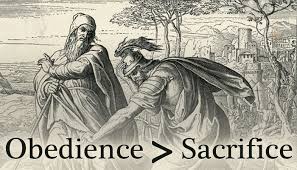
God’s purpose for David was to be a man of war. David was a fighter with the heart of a worshiper –  a warring worshiper. David was a destroyer and killer and a protector of Israel. Although he had a good heart with godly intentions, he still had to do things God’s way.  He was just part of the beginning of what God was planing not just in Israel but in the entire world. Even though, what we do is very important to God, he is even more particular in how we do it. Saul, David’s predecessor and mentor, did not take this into account and suffered worst possible punishment for his sin. “Obedience is better than Sacrifice”, were the words of Samuel to Saul after he made a sacrifice to God, which he as a King, had no business making (1 Samuel 15: 22). Seeking God’s face for our own goals has a huge impact on not just our own lives but on the lives of our descendants. Saul’s disobedience attracted a pattern of generational mishap and curses for his family, not only did the presence of God depart from him, but His sons to the third generation experienced misfortune and made wrong choices themselves.

You are more likely to continue down the path of wrong, if you are disconnected from the one who has the right direction. 

David’s one good choice to follow after God’s heart rather than his own carnal desires, led to him having a throne that is established forever. God is interested in legacy and not just that one goal you are looking to achieve. It is important to ask God for clear directions about what he wants you to do and how he wants you to do it. Let God fit your goals into the godly legacy he is trying to build through you.

set goals